
2025 Clinical Outcomes
Save Lifeskills Behavioral Health’s clinical outcomes to reference, revisit, or share with a provider.
Expert Care.
Proven Results.
Lasting Recovery.
For more than 35 years, Lifeskills Behavioral Health has provided individualized, evidence-based mental health treatment for adults with complex mental health, substance use, and co-occurring disorders. Recognized as a national center of clinical excellence, Lifeskills treats these conditions alongside trauma and behavioral addictions, with specialized programming for women, veterans, and the Jewish community.
That experience is reflected in the data. The outcomes that follow demonstrate how Lifeskills’ comprehensive continuum of care — spanning medical detoxification, residential, partial hospitalization, intensive outpatient, and transitional living across multiple Florida campuses — translates into measurable, sustained progress for the clients it serves.
In 2025, Lifeskills deepened that commitment by launching its Signature Program and Premier Diagnostic Insights (PDI) — intensive, diagnostically driven offerings built to bring greater precision to complex, overlapping presentations. By improving diagnostic accuracy, these programs sharpen every subsequent treatment decision, reinforcing the foundation for measurable outcomes.
Clinical Outcomes That Outpace the Industry
These evidence-based best practices are built on a framework of eight distinct clinical pathways. After assessing clinical need and diagnosis, each client is prescribed the most appropriate primary and secondary pathways, with flexibility throughout treatment to keep care aligned as their needs evolve.
Because outcomes are measured across these clinical pathways, the data reflect real performance for distinct clinical needs rather than a single blended average. Each client is guided by a team that includes a quintuple board-certified physician alongside licensed doctoral- and master’s-level clinicians, each with specialty certifications in their fields.
The Four Pillars of Care
- Evidence-based best practices – A framework of eight distinct clinical pathways, assigned by clinical need and adjusted throughout treatment, delivered by credentialed doctoral- and master’s-level clinicians.
- Integrated primary and behavioral care – Coordinated psychiatric, medical, psychological, and nutritional care, guided by ongoing assessment and individualized treatment planning.
- Family programming – Family therapy and structured education and support that extend recovery beyond the individual to the wider family system.
- Life skills training – Real-world skill-building in daily living, interpersonal effectiveness, and self-regulation that prepares clients for stability after treatment.
2025 | Lifeskills Residential + Outpatient
Client Demographics + Diagnoses
Lifeskills Behavioral Health specializes in treatment for mental health conditions, substance use disorders, and co-occurring disorders, serving a diverse adult population. The data below reflects the clinical complexity and breadth of the population Lifeskills served in 2025.
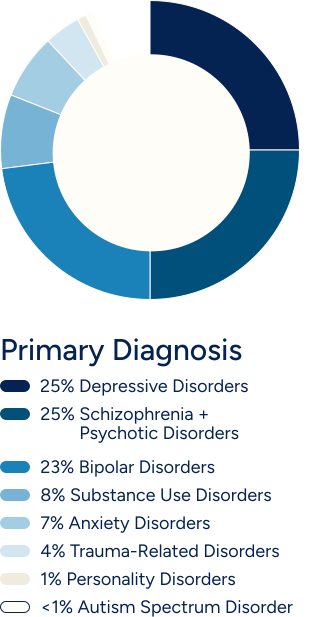
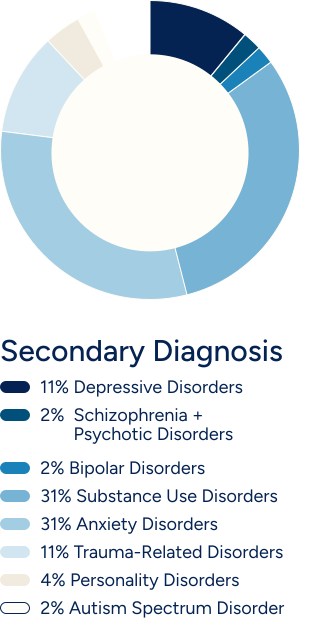
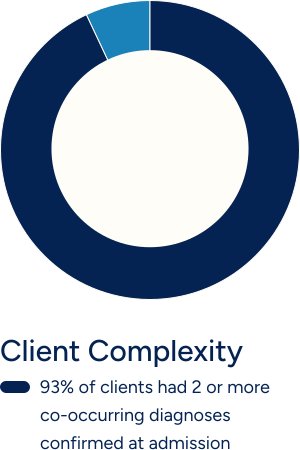
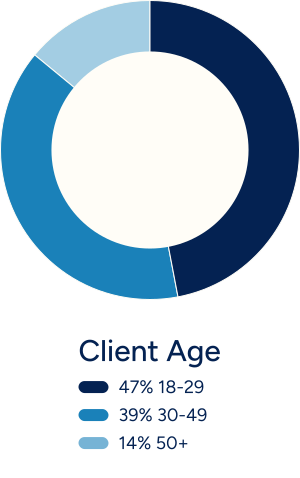
Total Discharges | 1,052
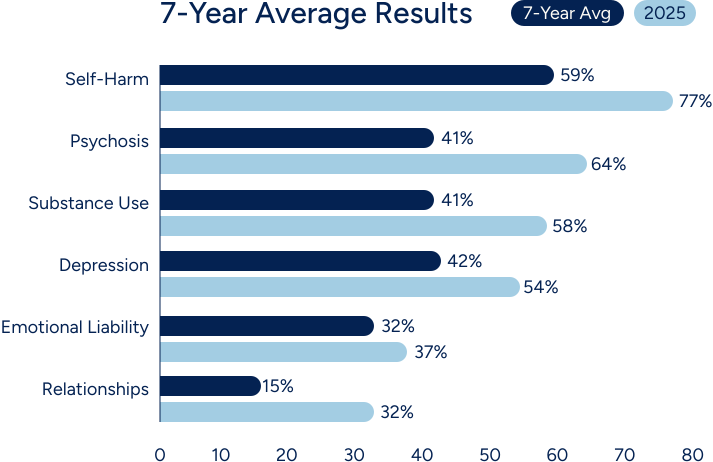
2025 vs 7-Year Average | Behavior + Symptom Identification Scale (BASIS-24)
Lifeskills Behavioral Health specializes in treatment for mental health conditions, substance use disorders, and co-occurring disorders, serving a diverse adult population. The data below reflects the clinical complexity and breadth of the population Lifeskills served in 2025.
49% ↓
2025 | Avg Reduction in Symptom Severity
40% ↓
7-Year | Avg Reduction
in Symptom Severity
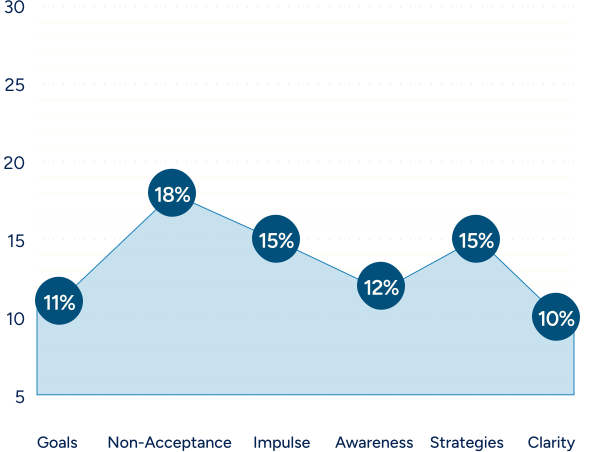
9-Year Avg | Difficulties in Emotional Regulation Scale (DERS)
A self-reported scale that assesses the effectiveness of dialectical behavior therapy (DBT). The results below reflect average improvement in foundational DBT skills and improved mood management within a 90-day timeframe.
*Lower scores indicate fewer problems with emotion regulation.
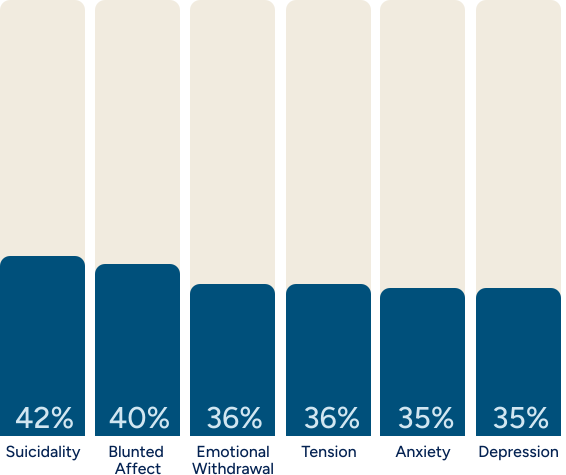
7-Year Avg | Brief Psychiatric Rating Scale (BPRS)
The Brief Psychiatric Rating Scale (BPRS) is a clinician-administered instrument that measures psychiatric symptom severity across 24 items, providing an objective, clinician-rated benchmark of treatment response that complements client self-report.
*All values reflect average percent reduction in symptom severity from admission to discharge. Higher percentages indicate greater clinician-rated symptom improvement.
Drug Attitude Inventory (DAI-10)
The DAI-10 is a validated self-report instrument used to measure clients’ attitudes toward their psychiatric medications. Positive attitudes are a strong predictor of medication adherence, which supports treatment stability and long-term recovery.
100%
7-year results of clients reporting a positive relationship with their medications
74%
Feel more normal
67%
Not tired or sluggish
83%
Benefits outweigh risks
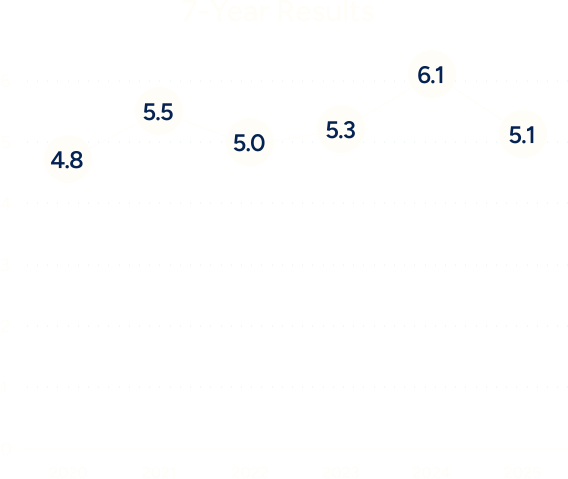
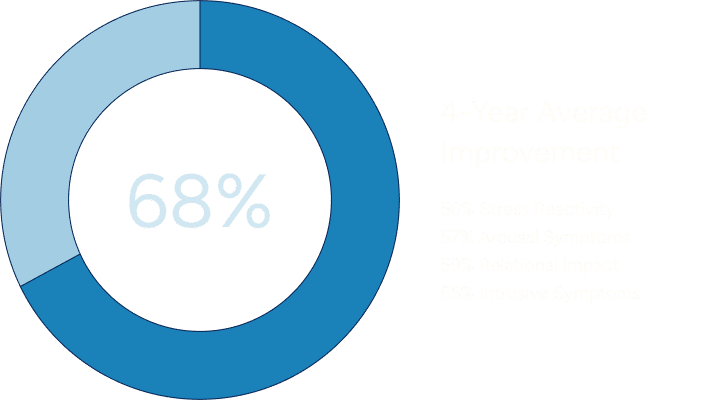
4 Year | Short Post-Traumatic Stress Disorder Rating Interview (SPRINT)
The SPRINT is a brief, clinician-administered, structured interview used to measure the core symptoms of post-traumatic stress disorder (PTSD).
Why These Results Matter
Trauma Is Among the Hardest to Treat
PTSD and complex trauma are among the most treatment-resistant presentations in behavioral health. A 68% sustained average, peaking at 74%, reflects both clinical depth and the doctoral-level expertise behind Lifeskills’ trauma treatment.

STRESS REACTIVITY
Less upset from stressful events and setbacks

AROUSAL SYMPTOMS
Reduced poor sleep, jumpiness, irritability

RELATIONAL IMPACT
Less interference with family and social relationships

INTRUSIVE SYMPTOMS
Reduced memories, nightmares, trauma reminders
Take the next step toward expert mental health care.
Lifeskills offers evidence-based mental health and substance use treatment across Florida. Contact our admissions team to request a confidential assessment.
Your privacy is our priority. All communication is completely confidential.